Yoga for Stress & Anxiety Relief

The Science Behind Why Yoga Reduces Stress and Anxiety
If you've ever stepped off your mat feeling calmer than when you stepped on, you already know yoga works. But why does it work? The answer isn't just "stretching feels nice" - it's rooted in measurable changes in your nervous system, brain chemistry, and hormonal balance. Let's break down the science.
1. Yoga Calms the Nervous System
Your body runs on two main modes: the sympathetic nervous system (fight-or-flight) and the parasympathetic nervous system (rest-and-digest). Chronic stress keeps people stuck in sympathetic overdrive - elevated heart rate, shallow breathing, tense muscles, racing thoughts.
Yoga's slow, controlled movements paired with deep breathing (pranayama) activate the parasympathetic nervous system. This is sometimes called the "relaxation response." Studies using heart rate variability (HRV) - a key marker of nervous system balance - consistently show that regular yoga practitioners have higher HRV, meaning their bodies recover faster from stress and stay balanced longer.
2. It Lowers Cortisol, the Stress Hormone
Cortisol is the hormone your body releases during stress. In short bursts, it's helpful - it sharpens focus and readies you for action. But chronically elevated cortisol (from ongoing stress, poor sleep, or anxiety) is linked to weight gain, weakened immunity, and even memory problems.
Research has found that consistent yoga practice lowers baseline cortisol levels over time. Poses combined with breathwork appear to interrupt the stress-hormone cycle, giving the body a chance to reset rather than staying in a constant state of low-grade alarm.
3. It Boosts GABA - Your Brain's "Calm Down" Chemical
GABA (gamma-aminobutyric acid) is a neurotransmitter that quiets down overactive brain activity. Low GABA levels are associated with anxiety and mood disorders - in fact, many anti-anxiety medications work by boosting GABA activity.
A notable study from Boston University School of Medicine found that a single 60-minute yoga session increased GABA levels in participants' brains by roughly 27%, an effect not seen in a comparison group who simply walked for the same amount of time. This suggests yoga has a direct, measurable calming effect on the brain - not just a psychological one.
4. Breathwork Directly Signals Safety to the Brain
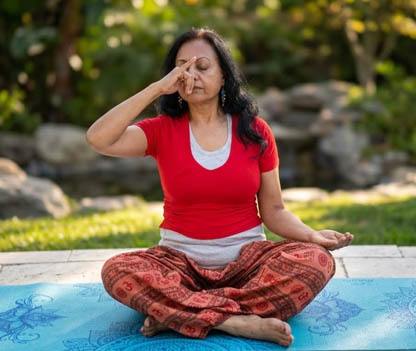
Pranayama (breath control) is one of yoga's most underrated tools. Slow, deep breathing - especially extending the exhale, activates the vagus nerve, which runs from the brainstem down through the chest and abdomen. Stimulating the vagus nerve tells your brain and body, "You're safe," which slows the heart rate and reduces the physical sensations of anxiety (like a racing heart or shallow chest breathing).
This is why breathing exercises are often the fastest way to interrupt a panic or anxiety spiral the effect happens within seconds, not minutes.
5. It Reduces Amygdala Reactivity
The amygdala is the brain's threat-detection center (fear center)- it's what fires up during fear or anxiety, even when there's no real danger present. Brain imaging studies have shown that regular yoga and meditation practice is associated with reduced amygdala activity and, over time, changes in its structural connectivity.
In simpler terms: consistent practice appears to retrain the brain to be less reactive to stress triggers, making people more resilient rather than just temporarily relaxed.
6. It Improves Sleep, Which Compounds the Benefits
Anxiety and poor sleep feed each other - stress disrupts sleep, and poor sleep worsens stress sensitivity the next day. Because yoga lowers cortisol and activates the parasympathetic nervous system, practitioners often report falling asleep faster and experiencing deeper, more restorative sleep. Better sleep, in turn, improves emotional regulation and lowers baseline anxiety - creating a positive feedback loop.
7. The Mind-Body Connection Reduces Rumination
Anxiety often thrives on rumination - replaying worries on a mental loop. Yoga requires focused attention on breath, alignment, and sensation, which pulls attention out of anxious thought spirals and into the present moment. This is functionally similar to mindfulness meditation, and several studies show yoga produces comparable reductions in anxiety symptoms as traditional mindfulness-based stress reduction (MBSR) programs.
The Takeaway
Yoga isn't just a feel-good habit - it's a physiological intervention. It:
- Shifts the body from fight-or-flight into rest-and-digest
- Lowers cortisol, the primary stress hormone
- Increases GABA, calming brain activity
- Activates the vagus nerve for immediate calming effects
- Reduces amygdala reactivity over time
- Improves sleep quality
- Interrupts anxious rumination through present-moment focus
The best part? You don't need years of practice to feel these effects. Research shows measurable changes in stress markers after just a single session - and the benefits compound with consistent practice.